Giovanni Falcone
He followed the money. He exposed the system. He paid the price.
Giovanni Falcone was not just a magistrate. He was the man who changed the way the Mafia is fought forever. Born in Palermo on May 18, 1939, he grew up in the Kalsa district, a place where opposite worlds coexisted: honest families and Mafia families, children playing together without yet knowing which path they would follow. It was there that Falcone learned to observe reality without illusions.
At home, he absorbed values that would guide him throughout his life: sacrifice, duty, dignity.Not abstract ideas, but real examples. Those principles became the foundation of his work. During his early career, Falcone came to understand a difficult truth: the Mafia is not chaos.
It is organization.
It is power.
It is a system.
And a system cannot be defeated with improvisation. It must be studied, dismantled, and proven.
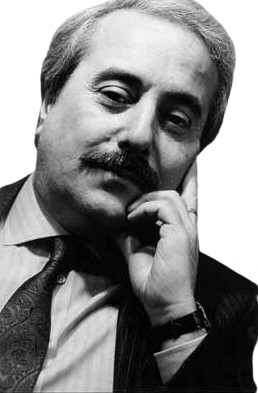
In the early 1980s, Falcone found himself facing something no one had fully understood before. Not just a group of criminals. But an international system. Everything began with the investigation into Rosario Spatola, a respected and seemingly clean businessman, connected to clans led by Salvatore Inzerillo and the Gambino family in the United States. A central hub in the drug trade between Sicily and America. When prosecutor Gaetano Costa personally signed the arrest warrants, he made a courageous decision. Shortly after, he was killed. Falcone took over that investigation. At that moment, his method was born. Testimonies were no longer enough. Traditional investigations were no longer enough.
The money had to be followed.
What this video shows
In this interview, Giovanni Falcone expresses one of his most powerful and enduring ideas: the Mafia is not an invincible force.
It is a human phenomenon, and like all human phenomena, it can be understood, challenged, and ultimately defeated.
From that moment on, Giovanni Falcone’s investigations began to change the understanding of the Italian Mafia forever. What had long been perceived as a loose collection of violent criminals was now revealed as a structured and hierarchical organization: Cosa Nostra. Through years of meticulous work, financial tracking, and judicial strategy, Falcone helped demonstrate that the Mafia operated with rules, coordination, and a central decision-making body. This was a turning point not only for Palermo, but for the entire fight against organized crime in Italy.
The collaboration of Tommaso Buscetta marked a decisive step in this process. His testimony did not simply confirm isolated crimes, but provided a comprehensive explanation of how Cosa Nostra functioned from the inside, including the role of the Commission and the relationships between different Mafia families. For the first time in history, prosecutors were able to present the Mafia as a single criminal system before a court of law. This led directly to the Maxi Trial of Palermo, a landmark judicial process that resulted in hundreds of convictions and established a new legal approach to fighting organized crime.
However, these achievements came with increasing isolation and danger. Falcone became one of the most exposed targets of Cosa Nostra, as his work threatened the very foundations of its power. Despite institutional resistance, internal tensions, and the constant risk to his life, he continued to pursue investigations and refine methods that would later become standard in anti-Mafia prosecutions. His commitment extended beyond individual cases: he was building a model for justice that could endure beyond his own presence.
On May 23, 1992, that threat became reality. Along the highway near Capaci, a massive explosion destroyed the road and killed Giovanni Falcone, his wife Francesca Morvillo, and three police officers escorting them. The Capaci massacre was not only an act of violence, but a message from Cosa Nostra to the State. Yet, instead of silencing his work, it exposed even more clearly the nature of the enemy he had spent his life trying to reveal.
Today, Giovanni Falcone is remembered not only as a victim, but as the magistrate who transformed the fight against the Mafia into a structured and global effort. His legacy continues to shape investigations, laws, and the very idea that organized crime, no matter how powerful, can be understood, confronted, and dismantled.
In one of his final interviews, Giovanni Falcone spoke openly about the risks surrounding his work.
In one of his final interviews, Giovanni Falcone spoke openly about the risks surrounding his work.
Those words would soon take on a tragic meaning.