PALERMO, Via d'Amelio - 19 Luglio 1992
Il giorno in cui il magistrato perse la vita
19 Luglio 1992: L’inferno di via D’Amelio
La strage di via D’Amelio si consuma a Palermo il 19 luglio 1992, a meno di due mesi dall’attentato di Capaci. Fu il secondo, devastante colpo sferrato da Cosa Nostra nella sua guerra aperta contro lo Stato italiano.
L’obiettivo è Paolo Borsellino, il magistrato che insieme a Giovanni Falcone aveva coordinato le indagini del Pool Antimafia, istruendo le prove che avevano portato alle storiche condanne del Maxiprocesso. Dopo l’assassinio di Falcone, della moglie Francesca Morvillo e degli agenti di scorta il 23 maggio 1992, era drammaticamente chiaro che Borsellino fosse il prossimo della lista. Lui stesso lo sapeva con lucida certezza. La pressione attorno al giudice era diventata insostenibile, l’aria a Palermo era sospesa, e l’ombra di un nuovo attentato non era più un’ipotesi, ma un conto alla rovescia.
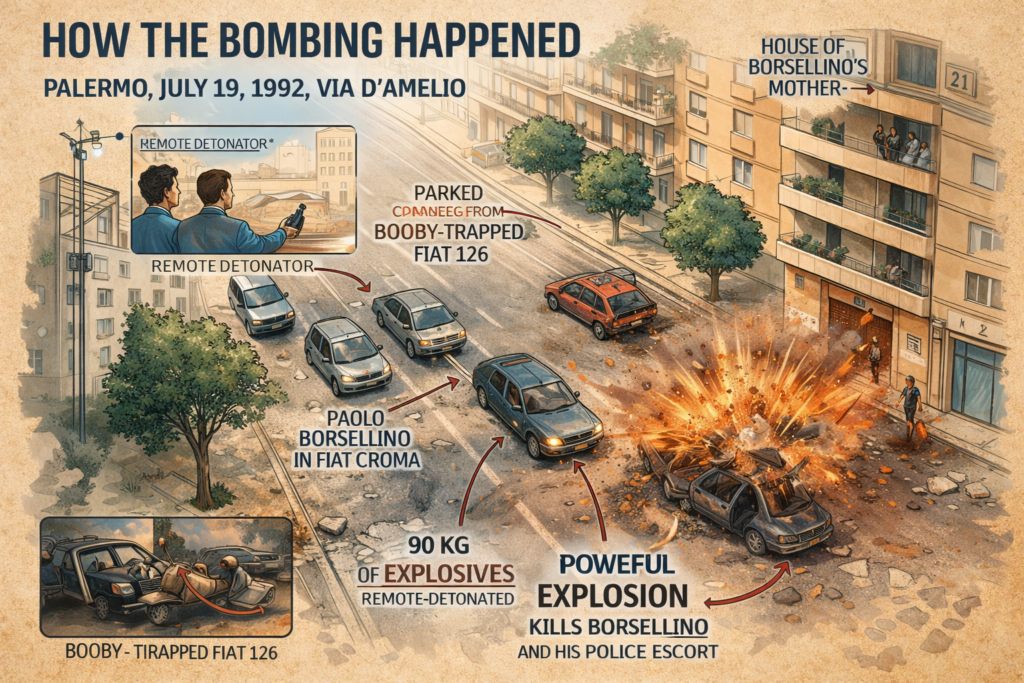
L’attacco viene pianificato in via Mariano D’Amelio, una strada stretta e senza uscita dove abita la madre del magistrato, Maria Pia Lepanto. Nel primo pomeriggio di quella domenica d’estate, Borsellino si reca da lei per una visita, come faceva abitualmente. I killer della Cupola, guidati dall’ala stragista dei Corleonesi di Totò Riina, hanno studiato ogni suo movimento, scegliendo quel luogo proprio perché vulnerabile e privo di una zona di rimozione forzata per le auto (nonostante le ripetute richieste di messa in sicurezza rimaste inevase).
L’organizzazione del commando è scientifica: una Fiat 126 viene rubata nei giorni precedenti, imbottita con circa 90 chilogrammi di esplosivo militare (Semtex-H) e parcheggiata proprio davanti al portone d’ingresso del palazzo. Quando Borsellino scende dall’auto blindata e si avvicina al citofono insieme ai ragazzi della scorta, il radiocomando viene attivato a distanza.
Alle 16:58, un boato terrificante squarcia la città. L’esplosione trasforma via D’Amelio in un inferno di fiamme, macerie e fumo nero. Paolo Borsellino muore sul colpo. Insieme a lui perdono la vita cinque agenti della scorta: Agostino Catalano, Vincenzo Li Muli, Walter Eddie Cosina, Claudio Traina e Emanuela Loi, prima donna poliziotto a cadere in servizio in una strage di mafia. L’unico a sopravvivere, seppur gravemente ferito, è l’agente Antonino Vullo, che al momento dello scoppio stava parcheggiando una delle auto blindate.
Lo spostamento d’aria è talmente violento da sventrare palazzi, incendiare decine di veicoli e frantumare i vetri a chilometri di distanza. L’Italia intera piomba in uno stato di shock e terrore. Non si tratta solo dell’omicidio di un giudice: dopo Capaci, Cosa Nostra sta dimostrando di poter colpire nel cuore di Palermo, con una potenza di fuoco militare, chiunque e in qualsiasi momento.
La strategia stragista e la reazione dello Stato
Questi eccidi non sono atti isolati, ma il culmine di una strategia di attacco frontale allo Stato deliberata dalla Commissione di Cosa Nostra. I boss mafiosi hanno compreso che i vecchi equilibri e le storiche impunità sono crollati: il 30 gennaio 1992 la Cassazione ha confermato gli ergastoli del Maxiprocesso, blindando il teorema Falcone. Sentendosi braccata, la leadership corleonese sceglie la strada del terrore. La violenza non serve più solo a eliminare i nemici storici, ma a ricattare le istituzioni, imporre una trattativa e dimostrare la propria assoluta sovranità sul territorio.
All’indomani della strage, l’opinione pubblica reagisce con un misto di rabbia, dolore e disperazione. Ai funerali degli agenti di scorta nella cattedrale di Palermo, la folla inferocita rompe i cordoni di sicurezza, contestando duramente le autorità politiche presenti. Il Paese è a un punto di svolta.
Per arginare l’emergenza, lo Stato risponde con decreti d’urgenza (il decreto Scotti-Martelli): viene inviato l’Esercito in Sicilia con l’operazione “Vespri Siciliani” e viene applicato in modo massiccio il regime carcerario duro del 41-bis, volto a isolare totalmente i boss detenuti dal mondo esterno per impedire loro di guidare i clan dalle celle. Al tempo stesso, la morte di Borsellino risveglia definitivamente la coscienza civile dei cittadini, trasformando la lotta alla mafia in una questione di dignità nazionale.
L’Agenda Rossa e il più grande depistaggio della storia d’Italia
Se la strage è un buco nero, ciò che accade nei minuti immediatamente successivi apre uno dei capitoli più inquietanti della storia repubblicana. Nel fumo di via D’Amelio, mentre i corpi sono ancora a terra, qualcuno si introduce nell’auto blindata di Borsellino e sottrae la sua Agenda Rossa. In quel diario il magistrato annotava meticolosamente gli appunti, i sospetti e i resoconti dei suoi incontri riservati dopo la morte di Falcone, comprese le sue scoperte sulla presunta trattativa in corso tra pezzi dello Stato e Cosa Nostra. Quell’agenda non verrà mai più ritrovata.
La successiva ricerca della verità giudiziaria è stata lunga, dolorosa e profondamente inquinata. Le prime indagini vengono deviate da quello che i tribunali hanno definito “il più grande depistaggio della storia giudiziaria italiana”. Sotto la pressione di indagini lampo, alcuni apparati deviati dello Stato e del gruppo investigativo dell’epoca costruiscono a tavolino un falso pentito, Vincenzo Scarantino, un piccolo delinquente della Guadagna costretto con torture psicologiche e fisiche ad autoaccusarsi della strage e a fare i nomi di innocenti.
Per oltre quindici anni, i processi sulla strage si fondano su questa colossale menzogna, portando alla condanna all’ergastolo di persone del tutto estranee all’attentato. Solo nel 2008, con le rivelazioni del vero uomo che rubò la Fiat 126, il collaboratore di giustizia Gaspard Spatuzza, il castello di bugie crolla. I vecchi processi vengono rivisti, gli innocenti scagionati e viene scritta una nuova verità, che individua nel mandamento di Brancaccio l’esecutore materiale, ma lascia ancora aperti enormi interrogativi sulle complicità esterne a Cosa Nostra.
Oggi, la strage di via D’Amelio rimane una ferita aperta nella storia d’Italia. Rappresenta il sacrificio estremo di un magistrato fedele alla Costituzione, ma anche il simbolo di una giustizia tradita da pezzi delle stesse istituzioni che Paolo Borsellino aveva giurato di difendere.
Lettera a mio padre
Un estratto della lettera di Manfredi Borsellino, letto da Savino.
Nessuna finzione. Solo memoria.
La strage di via D’Amelio si consuma appena 57 giorni dopo Capaci.
Non fu un attentato isolato.
Fu la prosecuzione della stessa guerra.
Quick Facts
Killed in the attack:
Paolo Borsellino
Agostino Catalano
Emanuela Loi
Vincenzo Li Muli
Walter Eddie Cosina
Claudio Traina